When social feeds start to look like a blur of raw ideas, it’s usually a sign that the planning system behind them is running on fumes.
Even professionals who think in headlines and visuals hit this wall. Some take a cue from essay writers who break big concepts into small, workable pieces, turning overwhelming tasks into something almost manageable. The same mindset transforms content planning.
Once those loose ideas finally settle into a clear structure, posting becomes easier to manage and far less chaotic than it felt before.

Source: https://www.pexels.com/photo/woman-in-white-shirt-using-a-black-laptop-7679855/
Start With Clear Direction and Measurable Intent
A strong content system begins with understanding what your posts must achieve. A random mix of ideas might entertain you, but it rarely leads to growth. Before anything else, decide what your content should do: boost engagement, grow awareness, support sales, or educate your audience.
Set one primary goal for the quarter, then break it down into measurable weekly checkpoints. For example, if your aim is improving engagement, track saves and comments rather than general “reach.” Precision helps you recognize what works.
With your direction set, you can confidently build your social media content plan on top of these foundations instead of guessing each week.
Build Your Pillars and Understand Your Audience
Content pillars act as consistent themes that keep your brand focused and recognizable. Choose three to five pillars that directly support your goals. A wellness brand might use: quick workouts, meal tips, mindset challenges, and user stories. A tech company might rely on: feature explainers, customer insights, comparisons, and tutorials.
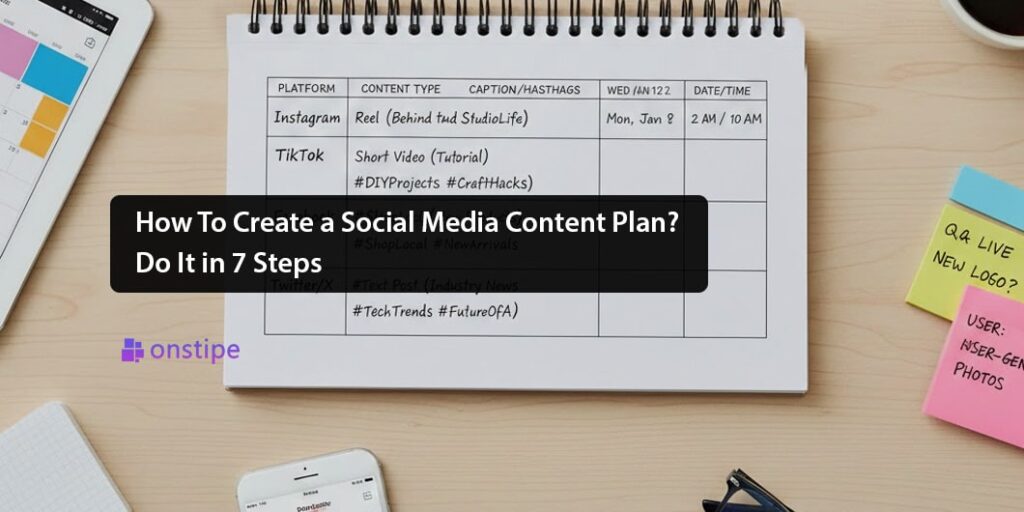
To organize this easily, create a reusable template that works like a command center for every idea you collect. A simple structure like the one below keeps everything in one place and removes the weekly scramble.
Social Media Content Plan Template (Copy & Use)
1. Content Pillars (3-5 themes you post about regularly)
- Pillar 1:
- Pillar 2:
- Pillar 3:
- Optional Pillar 4:
- Optional Pillar 5:
2. Monthly Focus (one goal or narrative for the month)
- Main goal:
- Supporting topic(s):
3. Weekly Breakdown (slots you fill rather than random ideas)
| Week | Theme/Pillar | Post format | Working title | Notes |
| Week 1 | ||||
| Week 2 | ||||
| Week 3 | ||||
| Week 4 |
4. Post Planner (one row per post – makes drafting easier)
| Date | Platform | Hook/Opening Line | Caption draft | Visual needed | CTA | Status |
Status options: idea/drafting/needs visuals/ready/scheduled
5. Asset Library (keeps you from searching your laptop endlessly)
- Brand photos:
- Short clips:
- Templates/carousels:
- User content:
- B-roll:
6. Performance Tracking (review monthly)
| Post | Saves | Shares | Comments | Profile visits | Clicks | Notes/Takeaways |
Before finalizing your pillars, check them against what your audience already interacts with. Look at your comments, saves, and retention analytics. Those signals tell you which topics deserve more attention.
Create a Weekly Flow That Keeps Your Ideas Moving
Planning day by day leads to stress and rushed captions. A weekly workflow is easier to follow and boosts consistency. To figure out how to plan social media content once and for all, let’s focus on a streamlined framework that doesn’t rely on inspiration.
A practical weekly cycle usually includes:
- Collecting ideas into one document
- Turning promising ideas into hooks and formats
- Preparing visuals, clips, or photos
- Drafting captions
- Scheduling content and logging results
Michael Perkins, who often analyzes performance patterns for essaywriters.com, notes how expert essay writers study audience reactions to predict which messages resonate most. Apply that mindset to your analytics. Look at what people rewind, rewatch, save, or comment on. These details shape your upcoming decisions.
Once you follow this routine for a few weeks, planning feels lighter because the system handles the structure while you focus on creativity.
Translate Topics Into a Working Calendar
Your next step is organizing ideas into a consistent posting rhythm. This calendar becomes your content plan for social media, giving you a visual overview of what goes live and when.
Start with monthly themes, then assign weekly content types for each pillar. For example:
- Early week: educational posts
- Midweek: user stories or behind-the-scenes
- Weekend: tips, templates, or reminders
This simple pattern removes decision fatigue. If your calendar says “education,” you already know the goal and the format options.
To deepen your structure, add a production timeline:
- Day 1: outline
- Day 2: draft
- Day 3: visuals
- Day 4: editing
- Day 5: scheduling
By distributing tasks evenly, you avoid bottlenecks and maintain a predictable pace.

Source: https://www.pexels.com/photo/a-person-writing-on-the-content-planner-7595273/
Build a Long-Term Social Media Content Strategy Plan You Can Improve Over Time
This document guides long-term decisions and keeps your message consistent across platforms.
Your strategy should include:
- A breakdown of audience segments
- Core content pillars
- Brand voice and tone
- Platform priorities
- Visual identity cues
- Insights from past performance
- Notes for new teammates or collaborators
This long-term strategy prevents drift. Even as platforms shift and trends change, your messaging stays anchored. It also makes delegation easier; teammates have a clear blueprint and won’t depend on you for every decision.
Your strategy should feel like a stable reference, not a static rulebook. Update it as your audience grows, your goals shift, or your brand evolves.
Choose a Posting Rhythm You Can Sustain
Ambitious posting schedules often collapse after a few weeks because they ignore the reality of time and energy. The best way to plan social media content is to build your schedule around your actual production capacity.
Look at how long your typical assets take to create. A carousel may take one hour, while a full video might take four. Build your schedule using those real numbers.
If you can only create three well-crafted pieces a week, that’s enough. Quality and consistency matter more than high frequency.
Step Back Before You Create Your Monthly Social Media Content Plan
A big-picture view helps you understand what stories you’re telling across the month rather than just week by week. Start each month by reviewing your analytics:
- Which posts performed well?
- Which ones underperformed?
- Did any topic spark conversations?
- Which format brought the most saves or clicks?
Then define a monthly focus. It could be education, onboarding users, highlighting products, or growing community connections. Build your weekly themes around that focus, and leave space for spontaneous trends or quick reactions.
A monthly rhythm keeps your content aligned with brand goals while still allowing room for flexibility and experimentation.
Wrapping Up
A good content plan doesn’t magically appear after one productive afternoon. It grows in layers: a few clear goals, a rhythm that suits your workload, and a system that slowly becomes second nature. Once the structure is in place, ideas stop slipping through the cracks and start building on each other.
Some weeks will feel chaotic anyway, but the plan gives you something steady to fall back on. Keep adjusting it as your audience and your skills evolve. That’s how your content keeps moving in the right direction.