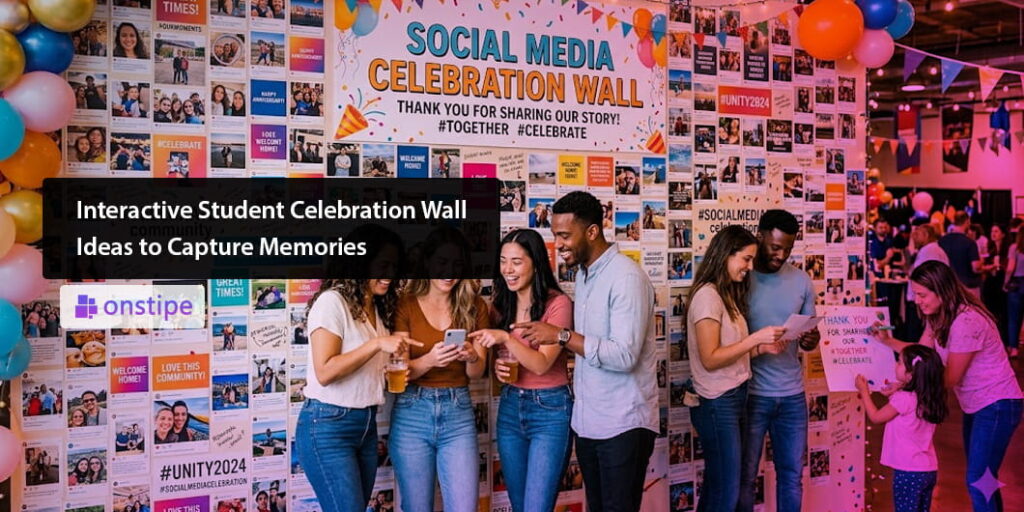
Student events create moments that deserve more than scattered phone photos. A social media celebration wall gives those memories a shared space. It turns posts, selfies, reactions, and short videos into a live visual story that students can enjoy together.
This format works especially well for campus life. It fits graduation parties, orientation weeks, club launches, dorm events, award nights, and student showcases. Instead of asking students to stand near a passive backdrop, schools can invite them to post, tag, respond, and interact in real time.
An interactive student celebration wall also feels current. Today’s students document milestones through Instagram stories, TikTok clips, short captions, group photos, and custom hashtags. A social wall gathers that activity into one place. It helps organizers capture excitement while making the event more visible online.
Why a student social wall works so well
A traditional memory board can still look nice, but a social wall creates movement. It shows new content as students post. That real-time element keeps people engaged. Students are more likely to participate when they know their photo or message may appear on a live screen or digital display.
This approach also supports school spirit. A celebration wall can highlight academic success, sports victories, creative projects, volunteer work, friendships, and funny behind-the-scenes moments. It allows different voices to appear in one shared feed.
Just as importantly, it blends offline and online participation. Some students enjoy taking pictures at a photo booth. Others prefer posting a story, leaving a short caption, or reacting to a prompt. A social media wall connects all of those actions into one experience.
What makes a social media celebration wall effective
A successful wall needs more than a screen and a hashtag. It should feel easy to use, visually clear, and relevant to student culture. When the setup feels natural, participation grows.
A clear event hashtag
The hashtag is the anchor of the wall. It helps students know how to join and makes the content easier to collect. A good tag should be short, readable, and specific to the event.
Avoid long or generic phrases. Students will not remember them. A tag like #CampusGradMoments or #UniAwardsNight works better than something broad and forgettable. The best option is easy to spell and easy to notice from across the room.
Strong visual identity
The wall should match the event style. For a graduation celebration, use elegant colors, polished typography, and milestone imagery. For a dorm party or student fair, brighter colors and playful graphics may feel more suitable.
Branding also matters. School colors, mascots, department icons, event slogans, and custom templates make the wall look intentional. That helps students feel they are part of a shared occasion rather than a random photo display.
Easy participation
Students should understand the process in seconds. If the setup requires too many steps, fewer people will join. Clear instructions near the wall help remove friction.
The most effective social wall systems usually include:
- a visible hashtag near the display;
- a short call to action with posting steps;
- a photo zone with good lighting;
- QR codes linked to event pages or galleries;
- moderation tools to keep the feed appropriate.
These details improve both safety and engagement. They also make the experience more inclusive for students who may join in different ways.
After adding these elements, it becomes easier to sustain activity throughout the event. The wall keeps refreshing, which encourages more students to take part.
Balancing preparation for a celebration with ongoing academic demands can feel overwhelming, especially when students are managing writing assignments, exam preparation, and tight deadlines at the same time. In these situations, some may use an essay online writing service to better organize their workload, handle complex academic tasks, and reduce pressure. This approach helps them stay engaged in campus events while keeping their academic responsibilities under control.
Best interactive student celebration wall ideas for social media events
Not every wall needs the same format. The strongest idea depends on the event type, audience, and venue. A graduation reception may need a polished social stream, while a student club fair may benefit from something more playful.
Hashtag memory wall
This is one of the simplest and most effective formats. Students post photos and short reflections using the event hashtag. Those posts then appear on a live event screen or curated digital board.
It works because it feels familiar. Students already know how to post. The wall simply gives those posts a communal setting. It also extends the life of the event, since the hashtag remains searchable later.
Live reaction wall
A reaction wall invites students to respond to prompts during the event. Prompts can include “best memory from this year,” “funniest campus moment,” or “what I will miss most.” Students answer through posts, short comments, or story captions.
This format creates richer content than photos alone. It captures emotion, humor, and personality. That makes the display more memorable and more useful for future event recaps.
Graduation spotlight wall
Graduation content often becomes repetitive online. A spotlight wall gives it more structure. Organizers can invite seniors to share one proud achievement, one favorite memory, and one future goal.
This creates a feed with more depth. Instead of endless posed photos, the wall becomes a digital celebration of student identity. It also gives quieter students a chance to contribute in a thoughtful way.
Creative content ideas students actually want to post
The best social walls do not depend on decoration alone. They need content formats that feel natural to students. A few smart prompts can dramatically improve participation.
Here are content ideas that usually perform well at student events:
- Post your best photo from the event.
- Share one memory that defines your year.
- Add a short thank-you message to a friend or mentor.
- Upload a selfie with your club, team, or class group.
- Finish the sentence “I will always remember…”.
These prompts work because they are simple and emotionally clear. Students do not need extra explanation. They can respond quickly while still adding something personal.
After using prompts like these, the wall usually becomes more varied. Instead of showing only faces, it begins to reflect stories, achievements, and community ties.
How to design the wall for stronger engagement
A social media wall should look attractive in person and on camera. Students will photograph the setup itself, so design choices matter. A cluttered background or weak lighting can reduce both participation and shareability.
Key design features to include
A few practical choices can make the wall more effective without increasing the budget too much. The goal is to support content creation, not distract from it.
Consider including these features in the setup:
- soft lighting for selfies and group shots;
- a branded backdrop with school colors;
- a central screen showing selected posts;
- simple signage with hashtag instructions;
- props that match the student event theme.
These additions make the display easier to use. They also help the event look better in photos and short videos shared across platforms.
Useful formats for different student occasions
Different campus events need different wall styles. The table below shows how a social wall can be adapted for common student celebrations.
| Event type | Best wall format | Social media focus |
| graduation party | spotlight wall | achievements, future plans, group photos |
| orientation week | welcome wall | introductions, first impressions, campus selfies |
| club fair | activity wall | team identity, recruitment energy, event highlights |
| sports banquet | victory wall | match photos, awards, team tributes |
| residence hall event | community wall | fun moments, friendships, casual memories |
This kind of planning keeps the concept relevant. It also helps organizers avoid using the same template for every student gathering.
Ways to keep the social wall safe and well curated
A live wall should feel fun, but it also needs moderation. Student events require a balance between openness and control. That is especially important when content appears on public screens.
Moderation tools help filter inappropriate language, duplicate posts, or unrelated tags. Organizers should also explain what kind of content is welcome. A short participation guide can prevent confusion and reduce off-topic material.
It is also smart to choose whether the wall will display everything automatically or only approved content. For formal school events, moderation usually creates a smoother experience. For smaller private celebrations, a lighter approach may feel more natural.
Common mistakes that reduce participation
Some celebration walls fail because they look good but feel hard to use. The biggest problem is usually lack of clarity. If students do not know what to post, they may ignore the wall completely.
Another mistake is using a weak hashtag. If the tag is too long or easy to misspell, the content feed becomes fragmented. Poor placement can also hurt results. A wall hidden in a corner will never create much momentum.
Low visual quality is another issue. Dim lighting, cramped space, and an unappealing backdrop make students less likely to take photos. Since this concept depends on social sharing, the wall must be camera-friendly.
Conclusion
Interactive student celebration wall ideas work best when they connect memories with social media habits. Students already capture milestones online. A well-planned social wall brings that energy into the event space and turns individual posts into a shared experience.
Whether you use a hashtag feed, a live reaction board, or a graduation spotlight display, the goal stays the same. Make participation easy, keep the design clear, and give students a reason to share something meaningful. When done well, a student celebration wall becomes more than decor. It becomes a live digital memory of the event.