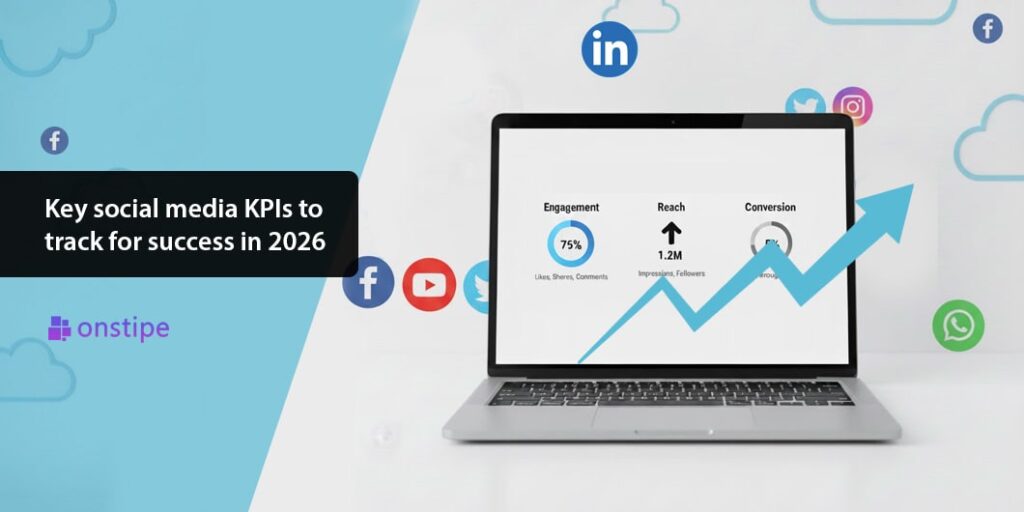
Social media isn’t just noise anymore, it’s an operating system for how brands get discovered, trusted, and bought. The tricky part, metrics have multiplied faster than attention spans. You open the dashboard, and it’s a mess of averages, rates, and graphs that look busy but don’t tell you what to do next. Let’s cut that down to the signals that genuinely move outcomes in 2026, and how to read them like a strategist, not a spectator. If you’re streamlining workflows elsewhere in the stack, automations and smart tools like modern shopify ai website builders can free time so your team actually acts on these KPIs, not just stares at them.
Attention that compounds: reach quality and repeat exposure
Big reach is seductive, consistent reach is useful. Raw reach tells you the size of the blast. Quality reach tells you if the right people listened.
Weighted reach
Measure reach filtered by audience fit: priority geos, high intent segments, warmed leads. A million eyeballs in the wrong market won’t move sales. Weighted reach tightens focus so spend and effort align with outcomes.
Frequency to familiarity
Track how often your target sees you per week. In 2026, two to four meaningful touches build memory without fatigue. If frequency is one, you’re invisible. If it’s seven, expect diminishing returns or unsubscribes.
Engagement that signals intent, not vanity
Likes are the hello, meaningful engagement is the conversation. Prioritize actions that correlate with discovery and purchase.
Saves and shares rate
Saves hint at utility, shares hint at social proof. Both outperform likes for predicting future traffic. Index content by save/share ratio to identify formats worth scaling.
Comment quality score
Not all comments are equal. Tag intent comments, questions, and product mentions. A simple rubric, genuine queries and buying signals up top, generic praise down low. Use this to trigger follow ups and refine content.
Conversion you can explain: attributable actions and assisted results
If you can’t tell how a post affected business, you’re guessing. In 2026, attribution stays imperfect, still, you can make it useful.
UTM discipline and deep links
Every campaign, every creator, every offer gets a clean UTM string and a destination that matches the promise. Fixing this one habit increases signal clarity across the funnel by a mile.
Assisted conversion rate
Track conversions that started with social touchpoints but closed via other channels. In mid to high consideration categories, assisted conversions are often bigger than last click. Treat them as real value, not rounding errors.
Micro conversion lift
Measure add to wishlist, quiz completions, email signups, store locator taps. If micro conversions rise, your content is doing the pre‑work that makes checkout easier later.
Velocity and consistency: content throughput without burnout
Content is a production line. Your job is to keep quality high and cadence steady.
Publish cadence stability
Count how often you hit your planned rhythm. Stability wins over volume spikes. Algorithms prefer predictable output, audiences trust reliable brands.
Creative refresh rate
Track how often you rotate hooks, visuals, and CTAs. If performance decays and refresh rate is low, you’re repeating yourself. Aim for small refreshes weekly, bigger swings monthly.
Discovery and brand demand: are people coming to you unprompted
Great social creates search behavior. Watch demand signals outside the platform.
Branded search lift
Track branded queries and combine with social bursts. When branded search rises after campaigns, you’re building memory. If it doesn’t, your message isn’t sticking or your targeting’s off.
Direct traffic from social windows
Overlay direct traffic spikes with your social calendar. People often move from app to site via direct. If the pattern aligns, social is doing its job even when tracking looks fuzzy.
Community health: retention and relationship depth
Communities purchase differently, they listen longer and forgive more.
Follower retention rate
Measure churn against growth. If you add 10,000 and lose 9,000, something’s off. Content fatigue or mismatch between acquisition hooks and ongoing value.
Active audience ratio
How many followers interact monthly. If this ratio climbs, your content’s relevance is increasing. If it drops, you’re scaling quantity without care.
Creator performance: ROI in the real world
Influencers aren’t billboards, they’re trust lenders. Treat them as partners, measure like a portfolio.
Creator weighted impact
Combine content saves, shares, comment quality, and attributable conversions. High impact creators might not be the biggest by follower count. Favor consistency and brand fit over raw reach.
Post to post decay
How quickly performance drops after the initial post. A slower decay indicates evergreen relevance, a faster one suggests fleeting hype. Use decay patterns to plan re‑posts or evergreen versions.
Paid efficiency: clarity beats clever targeting
Paid social is where you spend to confirm a hypothesis. Measure for learning, not just scaling.
Cost per qualified visit
Don’t stop at CPC. Define a qualified visit, time on page, interaction with key elements, product view depth. If qualified visit cost is high, your targeting or creative promise is misaligned.
Incremental lift tests
Run holdout groups to measure incremental impact. You’ll get cleaner reads on what spend truly adds versus organic momentum. No need for fancy models, even simple holdouts improve decisions.
Operations signals: the KPIs that keep the machine honest
Without operational KPIs, you fix the wrong things.
SLA for creative production
Time from brief to publish should be measurable and stable. If SLA blows up, your process is cluttered, or approvals are slow. Fixing this boosts throughput more than squeezing creators for more output.
Content QA pass rate
Track how often posts clear checks on brand voice, claims, links, and accessibility. Errors here hurt trust and waste spend. A QA checklist is boring, it saves campaigns weekly.
How to turn KPIs into action
KPIs aren’t trophies, they’re steering tools. A few simple practices help.
One page KPI cockpit
Keep a single view with 12 to 15 metrics max. For each, include target, trend, and decision hint. No colorful chaos. One glance, one takeaway.
Weekly decisions, not weekly reports
Every week, choose one thing to scale, one thing to pause, one thing to test. Tie decisions to the KPIs above. Teams build momentum when numbers drive changes, not just slides.
Tag hypotheses in your calendar
Label posts by the hypothesis they test. Hook variations, CTA language, creator genres. You’ll generate learning you can actually use, not just content you hope will stick.
What’s worth remembering
In 2026, social success isn’t about chasing every number, it’s about naming the few that predict real outcomes, then acting on them consistently. Focus on weighted reach and repeat exposure, intent‑grade engagement, assisted conversions, steady cadence, rising brand demand, and creator impact that survives the hype. Keep operations tight and decisions weekly. If you do that, the algorithms might change, your KPIs won’t, they’ll still point you toward work that compounds.