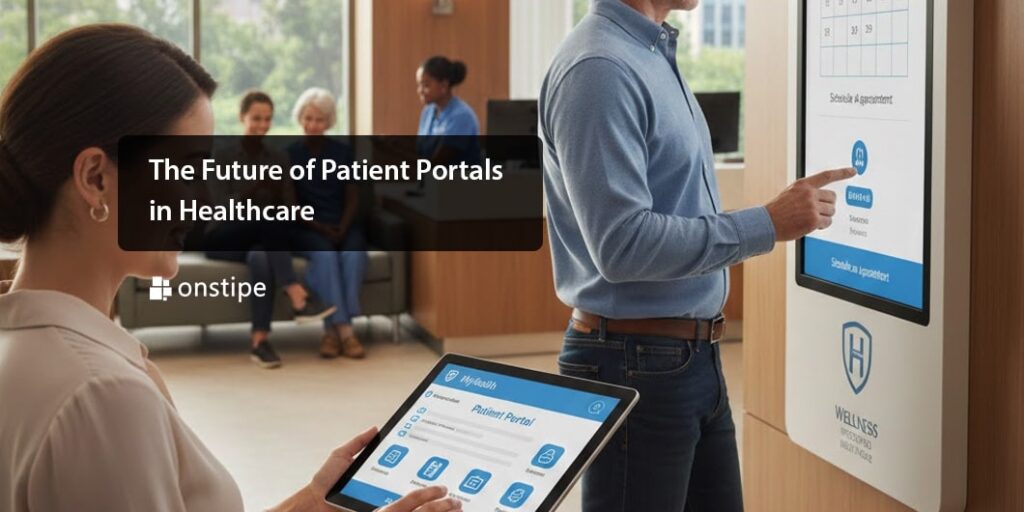
Healthcare organizations can boost portal adoption right now. Provider’s encouragement makes a big difference in usage rates, but only half the patients get such recommendations. Mobile-friendly designs play a vital role in keeping users engaged.
Patient portals give people control of their health information and create real benefits for healthcare systems. These digital tools will become crucial to healthcare delivery as technology improves and barriers disappear.
A world of connected, available healthcare information is taking shape, and patient portals lead this important change.
Evolution Of Patient Portals In Healthcare
Patient portals are going through a technological transformation. Healthcare systems continue to develop, and these digital platforms are adding advanced features that will change how we handle our medical information.
AI Integration And Smart Features
AI is boosting patient portals in remarkable ways. Oracle Health has added AI capabilities that will give simple explanations of diagnoses, test results, and treatment options directly in their portal. Patients can ask questions about their medical records and get context-aware answers right away.
Kaiser Permanente’s AI-powered Intelligent Navigator (KPIN) shows another breakthrough. Patients can book appointments by typing their needs in their own words.
This natural language processing tool achieved impressive results:
- 97.7% accuracy in detecting urgent medical cases
- 88.9% accuracy in recommending appropriate care pathways
- 9% increase in patient satisfaction scores
Machine learning algorithms analyze medical history, social behaviors, and biometric data to create tailored healthcare experiences. AI-powered chatbots handle routine queries, appointment booking, and triage. This reduces administrative burdens and improves response times.
When paired with modern cybersecurity practices like AI-SPM, which helps surface risks such as sensitive data exposure and unauthorized access, AI integration can safely modernize patient portals while protecting patient information.
Policy And Standardization Efforts
The 21st Century Cures Act has transformed health information regulations. The act emphasizes patients’ right to access to health information, making portals essential platforms to participate in records, appointments, and billing details.
Some policy challenges still exist. Regulatory frameworks must address data privacy, security measures, and third-party access. Healthcare professionals want clear guidelines that address these concerns.
Portal usage continues to grow, and adoption of governance procedures becomes crucial. Patient Engagement Technology Steering Committees provide strategic oversight for patient-facing technologies. These bodies create policies that define portal access, information display, and proxy access rules.
Patient-Generated Health Data
Consumer health technologies’ integration represents the most exciting frontier. Patient-generated health data (PGHD) has information captured by patients outside traditional care settings.
Wearable devices, glucose monitors, and blood pressure cuffs feed data directly into patient dashboards. Care teams receive automatic alerts for early intervention when vital signs fall outside normal ranges.
Healthcare professionals see more PGHD benefits, such as:
- Improved patient management and simplified clinical processes
- Tailored consultation preparation
- Valuable remote monitoring capabilities
Data quality concerns still exist. Many providers worry about consumer technologies’ accuracy, validity, and reliability. Better integration offers a solution; providers want to access PGHD directly through their EHR systems or patient portals.
Barriers to Patient Portal Adoption
Patient portals offer clear benefits, but many obstacles prevent people from using them widely. Healthcare systems need to understand these barriers to create better digital strategies that work for everyone.
Digital Literacy And Internet Access
The digital divide remains a fundamental barrier. While 87% of Americans use the internet, more than one-third don’t have broadband internet at home. This gap limits what patient portals can achieve.
Age and education play a vital role in how comfortable people feel with technology. Older adults often find it hard to use portals because they’re less familiar with technology. People without a high school diploma are 3.15 times more likely to feel uncomfortable with computers. High school graduates show 2.79 times higher odds of this discomfort.
Privacy And Security Concerns
Many patients worry about their online health data. About 17% of people who don’t use portals say security concerns hold them back. The difference between users and non-users tells a story: 80% of current users trust their data’s security, while only 37% of non-users feel safe.
Fear of data breaches tops the list of worries. One patient put it this way: “It’s private information and the demographic data maintained could easily be used to steal an identity”.
People with money problems tend to worry more about privacy, while those who know their way around technology worry less.
Multiple Systems And Fragmented Data
Healthcare data often sits in separate systems that don’t talk to each other.
A patient’s information typically spreads across:
- Primary care notes in one electronic health record
- Specialist records in another system
- Imaging scans on separate servers
- Pharmacy and claims data in different portals
This scattered approach creates real problems. Missing information can lead doctors to miss diagnoses. Repeated tests waste money, and slow record transfers might change treatment plans.
Having multiple portals makes things worse.. Patients end up trying to piece together their own health information, a task that overwhelms many.
Old technology adds to these challenges. Many healthcare organizations still use outdated systems that weren’t built to work with modern patient tools. These older systems often keep important data in formats that are hard to share or standardize.
What Encourages Portal Use and Engagement
Patients actively use healthcare portals when certain elements fall into place. Healthcare organizations can improve their digital tools by knowing what drives patient engagement.
Provider Encouragement And Training
A healthcare provider’s recommendation makes a huge difference in portal adoption. Patients use these portals much more when their providers encourage them. The numbers tell the story – encouraged patients to perform 65 more information access tasks, 94 more care convenience tasks, and 40 more patient engagement tasks per 100 patients. The surprising fact is that only 41% of patients say they received such encouragement.
Some groups hear about portals from their providers more often than others. The way patients learn matters too. Face-to-face, hands-on training works better than just watching video tutorials. Patients who receive tailored training use portals more frequently and become power users.
User-Friendly Design And Mobile Access
A portal’s success depends heavily on its design. Mobile apps have become crucial for successful portal strategies. Mobile access helps vulnerable populations check their test results faster and use the portal more often.
Design issues often create problems for users. Small screens, hard-to-read fonts, and complex navigation frustrate many patients. Seniors and people from different cultural backgrounds find poorly designed interfaces especially challenging. Portals that focus on real user needs show much better results.
Educational Resources And Reminders
Educational resources remain underused despite their value. Studies show that only 47% of patients use these materials. Many patients skip educational sections because they don’t know they exist. Those who use these resources report great benefits – they understand more, feel more confident, and worry less about their health conditions.
Conclusion
Patient portals have revolutionized our interactions with healthcare information. This piece shows how these digital platforms do more than store data – they help improve health outcomes, increase medication adherence, and make the healthcare system more efficient.
Real challenges still exist. Vulnerable populations can’t access these tools due to the digital divide. Many patients don’t have proper internet connections or devices. Data security issues and the hassle of using multiple separate systems create roadblocks that need solutions.
The future holds promise despite these challenges. Patient portals will soon feature AI that explains medical information in simple terms. Smart features like natural language processing will make the interface more accessible. Patient’s health data from wearables and home devices will provide doctors with a complete picture between visits.