
There is a question every Arizona brokerage eventually has to answer, and most answer it badly.
When a buyer in Scottsdale or Gilbert searches for an agent, whose name comes up? The brokerage, or the individual?
The brokerages winning right now have decided it should be the agent, and they have restructured how they operate to make that happen. Here is how that actually works, layer by layer.
Photo by Thirdman : https://www.pexels.com/photo/close-up-of-a-woman-holding-a-home-for-sale-sign-8469937/
Layer One: The Brokerage Sets the Floor
The base layer is infrastructure, and it is the least interesting part, which is why it gets neglected.
Consistent agent profile pages. Listings that display properly on mobile. Reviews that are collected rather than hoped for. A site that loads.
None of this generates visibility on its own. It just prevents the brokerage from being the reason an agent is invisible.
What matters more is what the brokerage enables above that floor, and the data on where business actually comes from is worth sitting with. According to NAR’s REALTOR Technology Survey, social media is now the top lead-generating technology at 39%, ahead of CRM systems at 23% and the local MLS at 17%.
Read that ordering again. Social media out-generates the MLS as a source of leads.
Adoption has followed. NAR’s 2025 Technology Survey found that 75% of agents use social media, with drone photography at 52% and AI-generated content already at 46%.
Which means social presence is no longer a differentiator. It is the baseline. The differentiator is how well an individual agent executes it, and whether they can afford to.
Layer Two: Why the Real Estate Franchise Arizona Agents Join Shapes Their Budget
Here is the part brokerages tend to skip in recruiting conversations, and it is the part that decides everything above it.
Visibility is not free. Video costs money, whether that is equipment, editing, or a videographer. Photography costs money. Paid social costs money. A decent CRM costs money. Consistent content costs either money or hours, and hours are money.
Agents fund almost all of it themselves. Which makes the split an agent works under a marketing question as much as a compensation one.
A traditional brokerage takes a percentage of every commission earned, often somewhere between 20% and 40%. On a busy year, that is the difference between running video on every listing and running it on the ones that seem worth it.
Realty ONE Group approaches this differently, and it is worth understanding their commission structure if you are evaluating a real estate franchise Arizona agents actually move toward. The model is 100% commission with a flat transaction fee rather than a percentage split. Agents keep their full commission and pay a fixed amount per deal.
The arithmetic matters more than the marketing language. An agent closing steadily under a flat-fee model has meaningfully more capital left over, and that surplus is what funds the content that generates the next transaction.
That is the actual mechanism. Visibility compounds, but only if you can keep paying into it.
Layer Three: Clients Do the Work You Cannot
The third layer is the one most brokerages have not touched, and it is the cheapest.
Your clients are already producing content. Closing day photos. Keys-in-hand shots. The first meal in the new kitchen. Moving day chaos. This material exists whether you collect it or not.
Client-generated content carries credibility that brokerage marketing cannot manufacture, for the obvious reason that it comes from someone with no incentive to say it.
Making this systematic is straightforward. Give clients a branded hashtag at closing, printed on something they will actually keep. Ask permission to feature them, once, clearly. Collect what comes in rather than hoping to spot it.
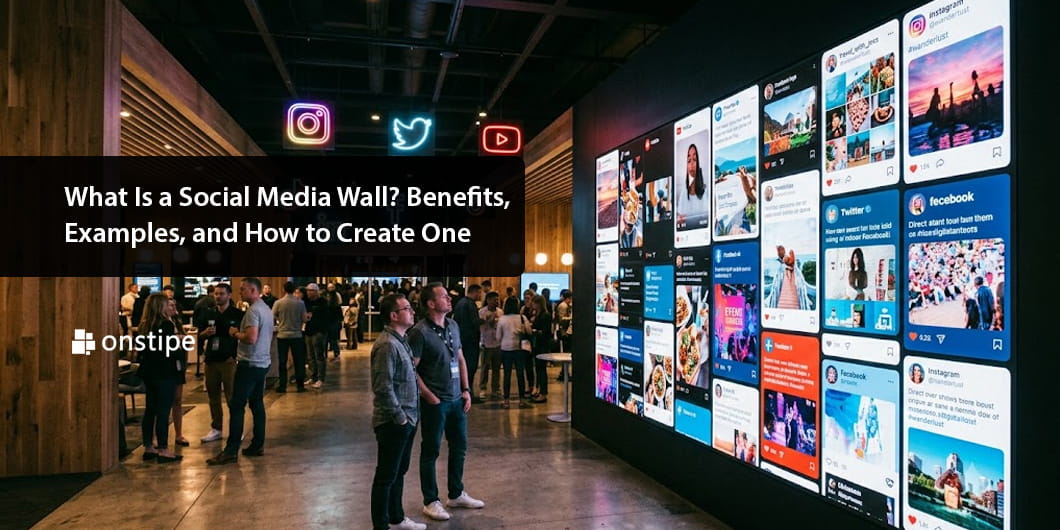
Then display it. A social wall on the brokerage site, or on a screen in the office, showing real closings from real clients does more for a prospective seller than any amount of copy about service quality.
It also feeds back. Clients who see themselves featured tend to post again and tell people they were featured.
Why This Matters Specifically in Arizona
Arizona is a competitive market for agents, not just for buyers.
The state supports a large real estate workforce, and Bureau of Labor Statistics data tracks employment and wage figures for real estate sales agents and brokers across Arizona metro areas. In a market with that many licensed professionals, differentiation is not optional.
Geography adds a wrinkle. The Phoenix metro is enormous and functionally made of distinct submarkets. An agent known in Chandler is a stranger in Surprise. Visibility here is hyperlocal, which favors agents producing consistent neighborhood-level content over those buying broad awareness.
Relocation is another factor. Arizona attracts a steady stream of out-of-state buyers who begin their search long before they arrive, and often before they have any local contacts. NAR’s research has long shown that 97% of homebuyers use the internet during their home search.
For a buyer in Seattle researching Mesa, your online presence is not supplementary. It is the entire first impression.
What to Actually Build
If you run a brokerage, the priority order is fairly clear.
Fix the floor first, because broken agent pages undermine everything above them.
Then make it economically possible for agents to invest in themselves, because a compensation model that leaves nothing for marketing produces invisible agents regardless of training.
Then build the collection system for client content, because that is free credibility your competitors are throwing away.
And measure at the agent level rather than the brokerage level. Brokerage-wide follower counts are a vanity number. Whether individual agents are generating inbound inquiries is the metric that predicts retention.
The Honest Summary
Agent visibility is not a marketing department function anymore. It is structural.
It depends on whether the infrastructure works, whether the commission model leaves agents enough to invest, and whether anyone is collecting the content clients are already making.
Brokerages that get all three right do not need to convince agents to stay. The agents can see the pipeline working.