Scroll through Instagram for a few minutes and you’ll probably see dozens of products you didn’t know you needed.
Maybe it’s a pair of sneakers worn by someone whose style you love. A skincare product shown in a real morning routine. Or a piece of home décor that looks much better in someone’s living room than it did in a product catalog.
For ecommerce brands, UGC has become one of the most effective ways to show products in real-life situations. But there’s one problem: seeing a product on social media doesn’t always make it easy to buy.
What Is Shoppable UGC?
Shoppable UGC combines two powerful ideas: user-generated content and ecommerce.
User-generated content is any brand-related content created by customers or members of a community. It can include Instagram photos, videos, Reels, product reviews, unboxing videos, tutorials, and styling posts.
Instead of simply displaying a customer’s Instagram post, a brand can make the featured products clickable. Visitors can then move from the content to the relevant product page.
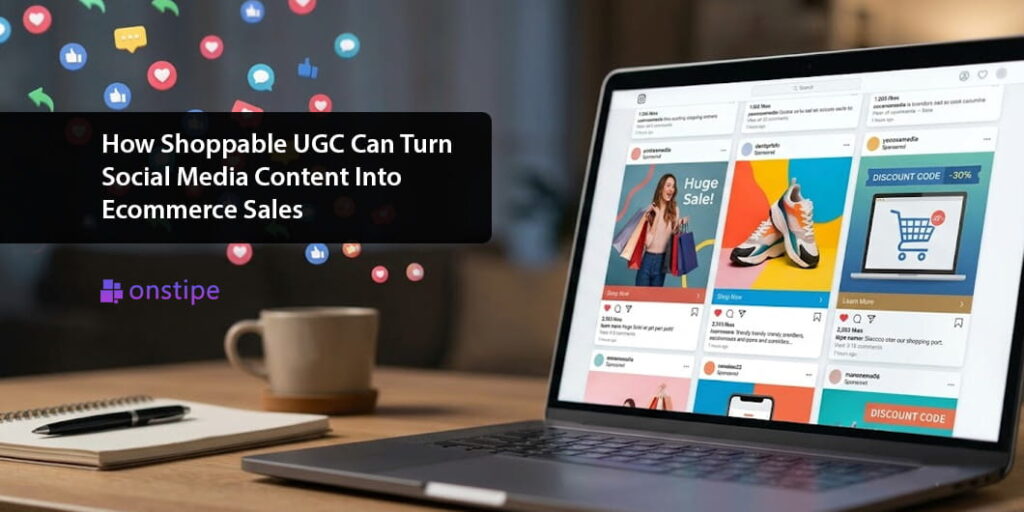
With a shoppable Instagram feed, that post can appear on your website with the jacket tagged. A visitor sees the product in a real-world setting, clicks the product, checks the details, and continues toward checkout.
Why UGC Works So Well for Ecommerce
Traditional product photography has its place, but customers also want to know what products look like in everyday life.
A professionally photographed product might show exactly what something looks like under studio lighting. A customer photo can show how that same product looks in a bedroom, on a person, at a restaurant, or during a normal day.
UGC can also feel more relatable because it comes from people rather than directly from the brand.
When potential customers see real buyers using a product, they can more easily imagine themselves doing the same.
From Inspiration to Purchase
One of the biggest challenges in social commerce is the gap between discovery and conversion.
A shopper might see a product on Instagram, become interested, and then have to search for the brand, find the website, locate the product, and navigate through several pages before making a purchase.
The customer discovers the product through content and immediately gets a path to learn more or purchase it.
This is especially useful for products where visual inspiration plays an important role, including:
- Fashion
- Beauty
- Home décor
- Jewellery
- Fitness products
- Food and beverages
- Travel accessories
- Lifestyle products
Turning Your Instagram Feed Into a Storefront
Your Instagram account may already contain valuable product content.
Customers may be tagging your brand, sharing purchases, creating styling videos, or posting product reviews. Instead of allowing that content to disappear into your social media timeline, you can bring it onto your website.
For example, an ecommerce fashion brand could create a feed featuring customers wearing its products. Each post could be connected to the products shown in the image.
Visitors browsing the website aren’t just looking at products on a white background. They’re seeing how those products are actually being used.
That difference can make the shopping experience feel more natural.
How to Create a Shoppable UGC Strategy
You don’t need thousands of customer posts to get started.
1. Find Your Best UGC
Look for customer content that naturally showcases your products.
Prioritize posts that are visually appealing, authentic, and relevant to the products you want to promote.
Reviews, tutorials, before-and-after content, unboxing videos, and lifestyle photos can all work well.
2. Ask for Permission
Before using customer-created content for marketing, make sure you have appropriate permission.
A simple process for requesting usage rights can help you build a reliable UGC library while respecting your customers and creators.
3. Connect Content With Products
Identify the products shown in each piece of content.
This is where shoppable functionality becomes important. A visitor should be able to understand which product is featured and easily access its product page.
4. Add UGC to Your Website
Consider placing shoppable content on high-traffic pages such as your homepage, product pages, category pages, or dedicated inspiration sections.
A shoppable Instagram feed can work particularly well on a homepage because it introduces visitors to products through real-world content.
5. Keep the Content Fresh
UGC works best when it feels current.
Regularly refresh your content so visitors see new customers, products, styles, and use cases.
Measure What Matters
Once your shoppable UGC is live, track how people interact with it.
Depending on your ecommerce setup, useful metrics may include:
- Feed engagement
- Product clicks
- Click-through rate
- Product page visits
- Add-to-cart activity
- Conversion rate
- Revenue influenced by UGC
These numbers can help you understand which content and products resonate with your audience.
You may discover, for example, that customer videos generate more product clicks than static photos, or that certain types of UGC perform particularly well on product pages.
The Future of UGC Ecommerce
Ecommerce is becoming increasingly visual and community-driven.
Customers don’t simply want brands to tell them that a product is good. Customer want to see how other people use it, wear it, experience it, and recommend it.
A well-designed shoppable experience brings that community content closer to the point of purchase. Instead of separating social inspiration from online shopping, it connects the two.
Final Thoughts
Shoppable UGC isn’t about replacing traditional ecommerce content. It’s about adding another layer of authenticity to the shopping experience.
Your customers are already creating content. They’re showing your products in real homes, real outfits, real routines, and real experiences.
When done thoughtfully, user generated content ecommerce strategies can transform social posts from content people simply scroll past into content that helps them discover products and take action.
The biggest opportunity is simple: don’t let great customer content stop at the social feed. Bring it closer to the products your customers want to buy.