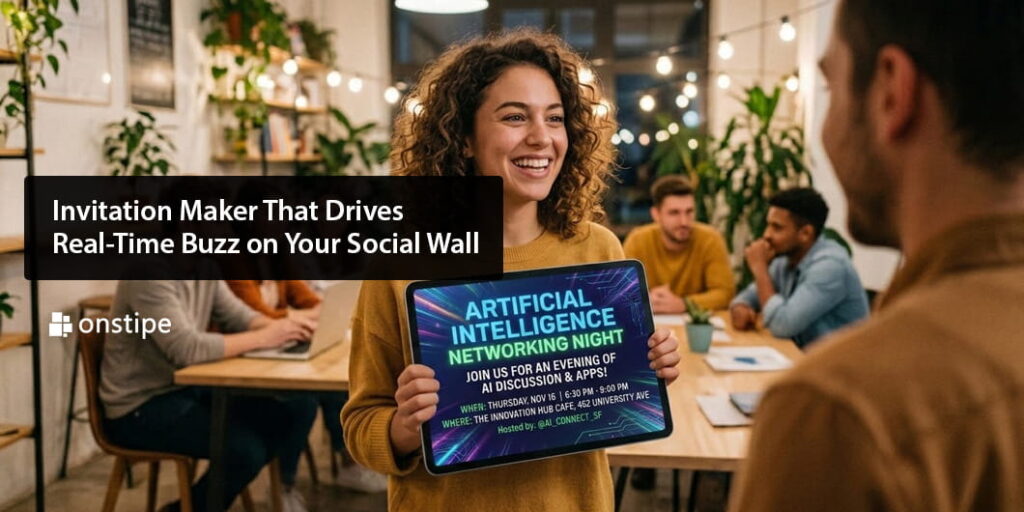
When people attend a modern event, they expect more than just a date, a time, and a chair. They expect the experience to feel alive, interactive, and instantly shareable. People want to participate in a conversation, not just sit quietly in an audience. If you treat your event as a simple calendar appointment to announce and forget, you miss a massive opportunity to build excitement.
This is exactly why pairing your initial guest data with a live, interactive display is becoming a brilliant strategic move for anyone hosting gatherings. Think about the very first touchpoint you have with your guests. Tools like Wixel power a fantastic invitation maker experience that captures RSVPs, social handles, and guest preferences right from the start.
When you connect that rich initial data directly to a live social feed during the actual event, magic happens. You instantly turn a single-use RSVP into an ongoing buzz engine. Let us explore exactly how this connection transforms your events and why you should set it up for your next big gathering.
From Invitation Maker to Living Moment: How Events are Changing
For a very long time, event communication moved in only one direction. You sent a card or an email, your guest clicked “yes,” and the interaction ended until they walked through the front door. This one-way approach leaves a massive gap in engagement. Today, the most successful events build momentum weeks before the doors open and keep the energy going long after the lights go down.
When you route your initial guest data into a real-time social display, you shift from a static announcement to an audience-driven conversation. Imagine a guest submitting their RSVP along with their favorite song request or their Twitter handle. When they arrive at the venue, a beautiful screen displays their social posts, welcomes them by name, and reacts to their updates in real time.
This connection unlocks incredible engagement. Before the event, you can display early excitement and RSVPs to build anticipation. During the event, the display becomes a living reflection of the room’s energy. After the event, it serves as a gorgeous visual archive of the memories your guests created together.
The Productivity Win Nobody Talks About
While the marketing benefits of an interactive feed are obvious, the behind-the-scenes efficiency is just as impressive. Organizing an event requires managing dozens of moving parts. Integrating your initial guest forms directly with your live display actually saves you a tremendous amount of time and reduces manual effort for your entire team.
Think about the automation involved. When data flows freely between your RSVP tool and your display screens, you never have to manually update spreadsheets, copy-paste names, or format text on the fly. Centralizing this data flow means your team coordinates much faster. If a VIP guest arrives and posts a photo, the system recognizes their handle from the RSVP and prioritizes their content on the big screen automatically.
This is not just a fun visual trick. It is a practical efficiency gain that compounds across every single event you run. You spend less time managing screens and more time actually talking to your guests. If you look at standard tips to boost productivity for remote or busy teams, automating your most repetitive tasks always sits at the very top of the list. Connecting your software tools does exactly that.
AI Invitation Maker: Building a Social Wall That Actually Gets Attention
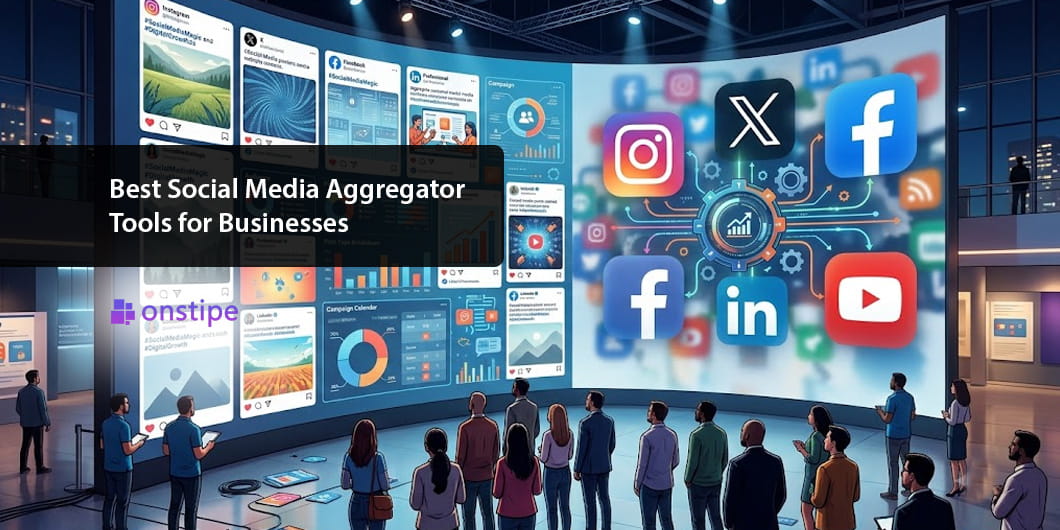
Of course, simply putting a screen in the corner of a room does not guarantee people will look at it. There is a huge difference between a high-performing social media event wall and one that completely disappears into the background. If you want people to engage, you have to curate the experience thoughtfully.
First, you need a strong, simple hashtag strategy. Keep your event tag short, easy to spell, and clearly visible on every table, badge, and screen in the room. If people do not know what to tag, they simply will not participate.
Second, you must moderate the content effectively. A good display tool lets you approve posts before they go live on the big screen, ensuring everything stays positive and on-brand.
Third, use the initial data you collected to enrich the display with personalized context. If you asked guests what city they traveled from during the RSVP process, your live feed can automatically add “Visiting from Chicago!” under their photos. This extra layer of personalization makes guests feel incredibly special and encourages others to join the conversation so they can see their own names on the board.
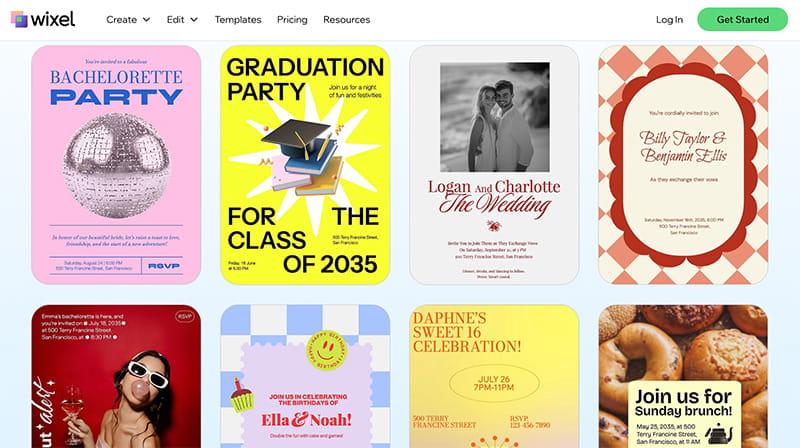
Image Source: https://www.wix.com/wixel/invitation-maker
Making It Work Across Event Types and Sectors
The beauty of this connected workflow is how easily it adapts to completely different environments. Whether you are running a massive corporate launch, an intimate brand activation, a private celebration, or a casual community gathering, the core mechanics remain exactly the same. You collect data early, and you display the resulting conversation live.
However, you should adjust the tone and the visual style to fit the specific audience. For a corporate conference, you might pull data from LinkedIn and focus the live feed on professional insights, speaker quotes, and networking opportunities. For a consumer brand activation, you want high-energy visuals, TikTok videos, and Instagram stories filling the screen.
You can easily adapt these strategies for different industries simply by changing the questions you ask on the initial form and the social platforms you choose to pull from. Find the specific use case that matches your goals, and flex the display to match the exact vibe you want to create in the room.
Everything Clicks Into Place
Bringing your initial guest data and your live social feeds together is not a complicated technical project. It is a fundamental mindset shift toward creating more connected, memorable events. You are taking the information you already have and using it to make your guests feel seen, heard, and valued the moment they arrive.
You have the tools you need to make this happen. Take the first simple step today. Pick a reliable software platform to handle your forms, test a catchy hashtag with your team, or run a small pilot screen at your next internal meeting before scaling up to a massive public gathering. Once you see how easily everything clicks into place and how much your guests love participating, you will never want to host a static, quiet event ever again. Build the connected experience your attendees deserve, and watch the buzz grow entirely on its own.