
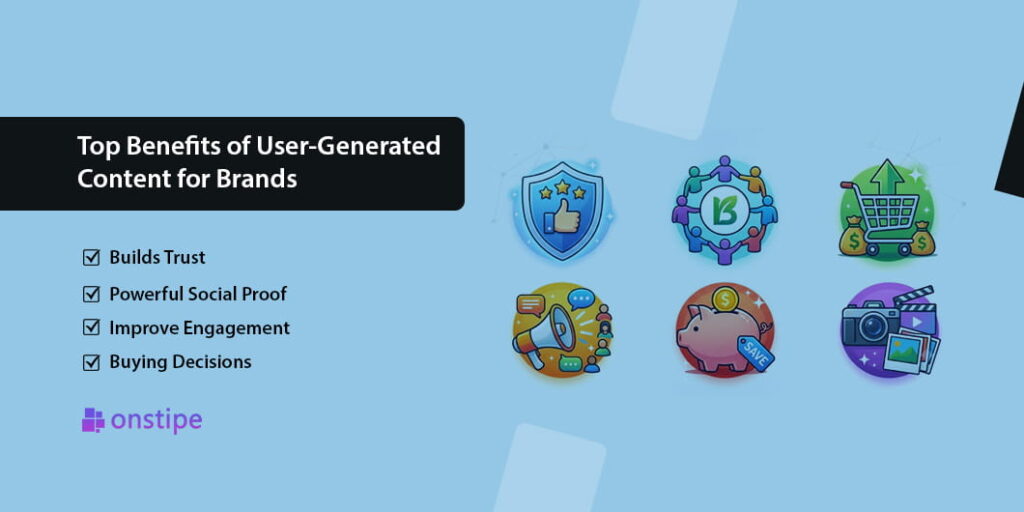
Today, people are surrounded by branded content everywhere they look. From social media ads and influencer promotions to emails and product videos, brands are constantly competing for attention. But there is one type of content that often feels more genuine than a polished advertisement: content created by real customers.
User-generated content is any content created and shared by customers or users about a brand, product, or service. It can include Instagram posts, TikTok videos, customer reviews, unboxing videos, testimonials, photos, blog posts, and more. Instead of the brand saying, “Our product is great,” customers are showing others how they actually use and enjoy it.
For modern brands, that authenticity can be incredibly valuable.
1. Builds Trust Through Authentic Experiences
Consumers have become better at recognizing traditional advertising. A perfectly edited product photo or carefully scripted advertisement may look impressive, but it does not always feel relatable.
When potential customers see someone using a product in everyday life, they can picture themselves doing the same. A customer sharing a skincare routine, posting a picture wearing a new outfit, or recording an honest product review can feel much more natural than a conventional advertisement. This authenticity helps brands establish trust.
That doesn’t mean every piece of UGC will automatically convince someone to buy. However, genuine customer experiences can give potential buyers additional context and confidence before making a decision.
2. Creates Powerful Social Proof
People naturally look at what others are doing when deciding whether a product or service is worth trying. Reviews, ratings, customer photos, testimonials, and social media posts all provide signals that other people have already interacted with the brand.
Imagine visiting an online store and finding a product with professional photographs but no customer reviews. Now imagine another product with similar professional images plus hundreds of customer reviews and real-life photos.
The second product may feel more reassuring because shoppers can see evidence from people who have already purchased it.
UGC marketing allows brands to turn these customer experiences into useful social proof across websites, social media, advertisements, landing pages, and email campaigns.
3. Makes Marketing Feel More Human
Brands can sometimes become too focused on selling. Every post has a product. Every email has an offer. Every advertisement has a call to action. Over time, audiences can become tired of being marketed to.
Customer-generated content changes the tone. Instead of constantly talking about what the brand wants customers to buy, brands can showcase what customers are actually doing, creating, and experiencing.
A customer’s photo from a weekend trip, a video explaining how they use a product, or a simple review can make a brand feel less like a corporation and more like a community.
That human element can make a significant difference in how people connect with a business.
4. Provides a Constant Source of Fresh Content
Creating original content for every social post, campaign, product launch, and advertisement can be exhausting. UGC gives marketing teams another source of creative material.
Customers may produce content in formats that a brand’s internal team would never think of. They might create funny videos, creative photographs, tutorials, reviews, comparisons, or stories around their experiences. With the right permissions and strategy, brands can repurpose this content across multiple marketing channels.
A single customer video, for example, could potentially become social media content, website material, an email feature, or part of a paid advertising campaign.
A UGC platform can make this process easier by helping brands collect, organize, manage, and discover customer-created content in one place.
5. Helps Improve Engagement on Social Media
People don’t just want to consume content; they want to comment, share, react, create, and participate in conversations. UGC naturally fits this behavior.
When brands feature customers in their social media content, those customers may be more likely to engage with the post or share it with their own audience. Other followers may also be encouraged to participate after seeing people like them featured.
This can turn social media from a one-way communication channel into a community.
For example, a clothing brand might encourage customers to share photos of how they style a particular product. A coffee brand could invite customers to share their morning coffee moments. A travel company might ask customers to post their favorite trip memories.
The product becomes part of a larger story.
6. Supports Better Buying Decisions
Professional marketing materials can answer some of these questions, but customer content can provide another perspective.
Reviews and demonstrations can help potential buyers understand the product beyond its official description.
This is particularly useful for products where appearance, usability, or real-world experience matters. Seeing a product being used by another customer can remove uncertainty and provide valuable context.
7. Can Make Paid Advertising More Relatable
Brands are increasingly incorporating customer-created videos, testimonials, images, and reviews into paid advertising campaigns.
Why? Because an advertisement that looks and feels like something a real customer would naturally post can sometimes be more relatable than a highly produced commercial.
The goal isn’t to make advertising deceptive. Instead, brands can use authentic customer experiences to communicate product benefits in a more familiar format.
For brands experimenting with UGC marketing, testing different customer stories, formats, hooks, and messages can help identify what resonates with their specific audience.
8. Strengthens the Relationship Between Brands and Customers
UGC isn’t only valuable because it helps attract new customers. It can also make existing customers feel appreciated.
When a brand shares a customer’s post, features their story, or responds to their review, it shows that the relationship goes beyond a transaction. That recognition can encourage customers to participate again.
Over time, this can contribute to a stronger sense of community around the brand. Customers stop being just buyers and can become active participants in the brand’s story.
9. Gives Brands Valuable Customer Insights
There is another benefit of UGC that is easy to overlook: listening. Customer-generated content can reveal how people actually perceive and use a product.
Customers may highlight features that a marketing team rarely mentions. They may discover unexpected use cases, ask recurring questions, or explain problems that the brand hadn’t considered.
These insights can influence future marketing campaigns, product development, customer service, and overall brand communication. In other words, UGC isn’t simply content for brands to publish.
10. Helps Build a Stronger Brand Community
Ultimately, successful brands are often about more than products. They are about relationships, identity, and community.
When customers see other customers represented in a brand’s marketing, the brand can begin to feel more inclusive and relatable. Different people can share their own experiences, perspectives, and stories.
That creates a sense of participation. The strongest UGC strategies don’t simply ask customers to “post and tag us.” They give people a reason to participate and make them feel that their contribution matters.
How Can Brands Get More From UGC?
Brands can encourage customers to share content through branded hashtags, product reviews, contests, community campaigns, post-purchase emails, or simple calls to action. Brands also need a system for organizing submissions, obtaining appropriate permissions, identifying high-quality content, and using it responsibly.
This is where a UGC platform can become particularly useful. Instead of searching through multiple social channels manually, marketers can use dedicated tools to streamline the collection and management of customer content.
Most importantly, brands should keep the experience authentic. Customers don’t need to create perfect advertisements. Their real experiences are precisely what make UGC valuable.
Final Thoughts
User-generated content has become an important part of modern brand marketing because it brings something traditional advertising often struggles to deliver: the voice of the customer.
From building trust and strengthening social proof to generating fresh content and creating stronger communities, UGC can support different stages of the customer journey.
The key is to think beyond simply collecting photos or videos. Effective UGC marketing is about giving customers a voice and then using those genuine experiences to create meaningful connections with others.
When brands listen to their customers, celebrate their stories, and make room for real experiences in their marketing, the result can be more than a content library. It can become a community-driven brand story that customers themselves help create.